Thursday, June 9, 2016

"This partnership will provide our Wentzville, Mo., assembly plant more flexibility to keep up with continued demand for mid-size trucks and full-size vans." - Cathy Clegg, GM's vice president of North America manufacturing and labor relations.

Navistar to Build GM's Cutaway Vans


EV Ride-Sharing Gains Traction

Sunday, April 3, 2016


2016 New York Auto Show 
Electric Vehicle Report
Several car manufacturers introduced new electric and plug-in electric vehicles at the New York Auto Show. At the same time Tesla launched the Model 3. We are approaching the moment in which EVs will join the mass market. 
The target is to have an electric vehicle with approximately 200 mile range and a price of $30,000-$35,000. 


The New Electric Vehicles

Chevrolet Bolt is the first to reach the target of 200 mile and a price of $30,000, it will be available later this year.
CHEVY VOLT

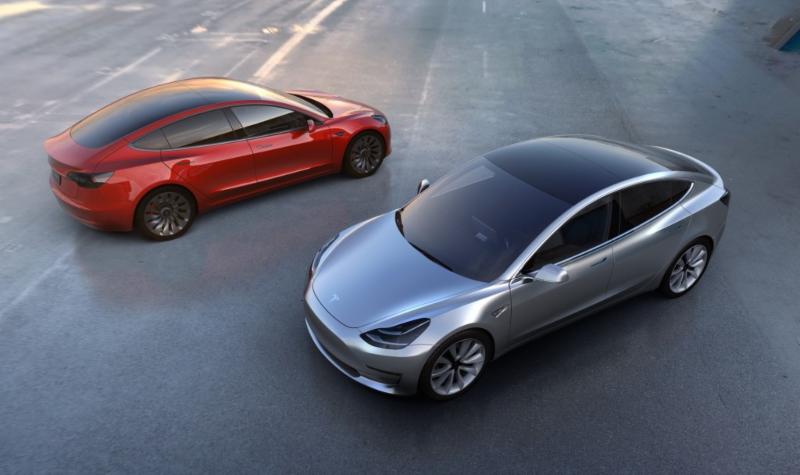
This week Tesla finally unveiled the expected Model 3 which is designed with the same objectives of the Bolt. The price is set at $35,000 and the range is 230 miles. Tesla says they already received 130,000 reservation.


TESLA MODEL 3
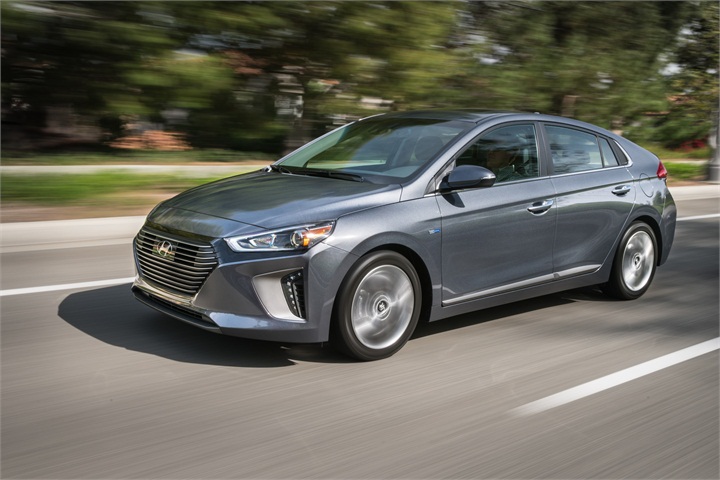
Hyundai launched the Ionic with 3 models: a pure EV with 110 mile range, a plug-in hybrid with 25 mile range and hybrid version just like the original Prius.

HYUNDAI JONIC

All electric vehicles enjoy the $7,500 federal tax credit and the State tax credit which varies from $0 to $5,000 depending on the State.


The New Plug-In Hybryd Vehicles

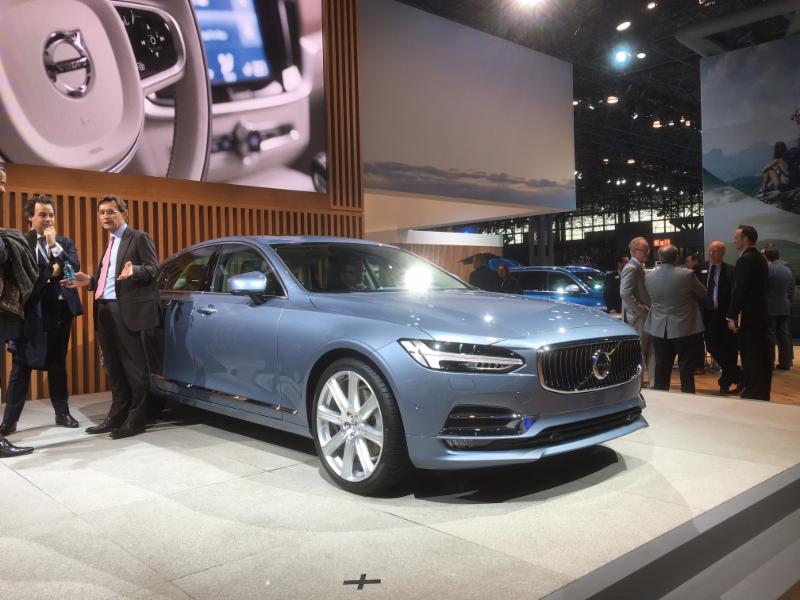
Volvo presents the T90 and the XC90 both plug-in hybrid with approx. 25 mile range and a very powerful 2.0L 4 cylinder turbo gasoline engine.
VOLVO XC90


VOLVO T90

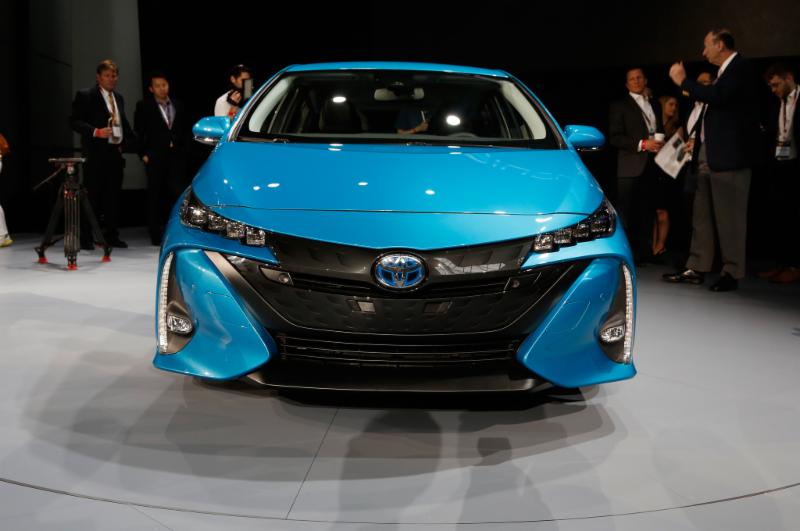
Toyota introduced the all-new Prius Prime with a new attractive design and overall better performance for batteries and engine.


PRIUS PRIME

BMW displayed a full range of Plug-In Hybrid cars and SUVs that will line up next to the i3 and i8 models.
The Series 3, Series 5, Series 7 and X5 are all available with a plug-in hybrid options.
Also Porsche featured the Panamera and the Cayenne with a plug-in Hybrid option.
Nissan Leaf has now a larger battery pack option to reach 110Mi.

Hyundai Market Research 

As you can see this year the auto show has a larger participation of EVs compared to last year when oil prices were almost double of the current prices.  This means that EVs are now more main stream.

During the Hyundai press conference, the auto maker reported on the results of of a market analysis on what drivers want to see in an EV. Frankly there are no big surprises but it is important that now the car manufacturers are listening:
  • Better design, electric does not mean ugly
  • Safety
  • Ease of use, designed for all not just techies
  • Range confidence, add more charging stations
Many of the models shown in New York meet these requirements.

Carlos Goshn


CARLOS GOSHN, CEO NISSAN-RENAULT
Carlos Goshn was the keynote speaker at the breakfast conference, just before the official opening of the NYAS. He gave an overview of the results of Nissan-Renault Group, their commitment to electric vehicles and their charging infrastructure. In the next 2 years we  see an acceleration of the introduction of more appealing and cost competitive EVs which will attract a much broader consumer base. The stricter emission regulations forcing the car manufacturers to offer more efficient engines and the lower cost of the lithium batteries will move the EVs from the niche to the mass market.


Tuesday, March 22, 2016

Source of Electricity Generation in the US

Natural Gas Replaces Coal as Main Source of Electricity
U.S. Energy Information Administration announced that "This year, natural gas is expected to supplant coal as the No. 1 source of electricity in the United States. Gas will supply 33.4 percent of power, and coal will contribute 32 percent", the EIA projected in the March installment of its Short-Term Energy Outlook.
“This would be the first time that natural gas has generated more power than coal on an annual basis,” the agency says. Natural gas beat out coal during several months last year, but beating it out for the year is another matter and far more momentous.

Saturday, March 19, 2016

                                                           THE FUTURE OF LNG

Deloitte Consulting's report on LNG titled "LNG at the Crossroads" gives an accurate overview of the
ever-evolving LNG business. LNG has gone through a classic case of boom-bust.
We experienced an impressive growth and now we are going through a phase a major restructuring.

LNG global trade has quadrupled in the last 20 years and is expected to further double in the next two decades mostly from the US and Australia, according Deloitte Consulting LLP. The report outlines the seven key factors that will shape the LNG industry in the years to come:
  • Global economic growth: LNG consumption is driven by global growth in Europe and Southeast Asia. A slip in regional growth, particularly China, would flatten natural gas demand in key importing countries.
  • Energy efficiency: Energy intensity of global growth has declined over the last few decades as high energy prices and environmental concerns have driven the adoption of higher efficiency technologies.
  • Excesses capacity: New capacity coming online in the U.S. and Australia is weighing down on an already saturated market. As few as one in twenty planned projects may be need to meet demand through 2035, and only those with lower costs, direct access to markets and signed buyers will move forward.
  • Shipping costs: Shortening the trading distance with more flexible contracts and widening of the Panama Canal can reduce the cost of shipping, driving an increase in volumes as incremental margins improve. This will reduce the natural gas price differential required to drive investment.
  • New markets: Japan and South Korea import half of all LNG volumes, historically paying a premium over shipments in the Atlantic basin. Growth in trade will require new LNG regasification facilities to be built in more countries to meet growing global fuel needs.
  • New end users: LNG is traditionally consumed for utility-scale power generation, but LNG as an alternative transport fuel for shipping, trains or trucks as well as a power source for remote small-scale grids will provide a long tail of potential demand growth.
  • Market Liquidity: Floating liquefaction and regasification combined with new countries building both import and export capacity can transform the current contract-dependent market into one that provides trading opportunity through transparent gas benchmarks and a flexible spot market.
With these changes, it is imperative to understand the industry’s strengths, weakness, opportunities and threats. LNG ventures are prone to cost overruns and delays, according to the report. The best example is Chevron Corp.’s Gorgon LNG in Australia which has exceeded its budget and timetable.
New technology improvements make it possible to unlock value from increasingly smaller fields and markets, according to Deloitte. Growing demand is expected from small-scale regas in isolated markets or as transport fuel for heavy-duty trucks, trains and shipping
LNG makes it possible to monetize stranded gas reserves and provides more predictable cash flows and diversification compared to the traditional exploration and production business.  The Galileo Cryobox offers an advanced technology permitting a easy entry in the LNG market with lower capital investment than the conventional production plants and the flexibility of a modular production. Furthermore Cryobox can start and stop withing 30 minutes offering great demand response.
                                          Galileo Cryobox - Capacity 12 Ton/Day

Wednesday, March 9, 2016

Today the Wall Street Jounal has an article titled "Chevron LNG Bet Meets Big Chill".
The total investement of the  Gorgon project mushroomed from $37 to $57 billion.
The installed capacity is 15.6 million metric tons per year. Chevron now faces lower than expected demand due to cool down of the economy in China and low gas prices.

We think a more decentralized production strategy of LNG is actually more efficient and less costly.
The Galileo Cryobox is easy to install and produces on demand with minimum personnel. Each module can produce 4,500 metric tons per year. In the pictures below the San Vincente plant in Argentina produces 32,000 metric toms per year. One operator manages the plant and all activity can be remotely controlled via Galileo SCADA.
                                          San Vincente - Cryobox Plant